
Buyer guide
China Blower Supplier Audit: A Checklist from Inside the Factory
This is the audit checklist written from the other side of the table. LONGWELL is Ningbo Longwell Electric Technology Co., Ltd., in Yuyao, Ningbo, in fans and blower components since 1990 and shipping to more than 30 countries — audited often enough to know which questions find something and which only produce a tour and a wall of logos. The questions below ask for records, and records are harder to stage than a corridor.
One thing has to be settled first. We do not build every family we sell, and at this size no blower supplier does. Cross-flow fan production and the motor winding line run in our own plant, on our own drawings and tooling. Everything else is engineered and specified by LONGWELL, built to LONGWELL drawings in qualified partner plants, and inspected to LONGWELL standards. The most useful thing you can do on any audit is make every supplier write their own version of that sentence, family by family.
The document pack to request before you travel
Send this list with a specific model code in it. What you learn from a refusal is worth as much as the documents themselves.
| What to ask for | What a real one contains | Weak answer |
|---|---|---|
| Drawing and revision control | A drawing and datasheet carrying a version number, the names that made, reviewed and approved it, an issue date, and a change table giving reason and date for every revision. | Your own drawing, their logo, no revision field. |
| First-article report | Measured values against each drawing dimension, not tick boxes, plus a signature and a written rule for when it repeats: new revision, new tool, new plant. | "We check the first piece." No form. |
| Dynamic balance records | The grade taken off the drawing for that part, the machine used, residual unbalance per rotor. Our EC forward-curved datasheets carry G6.3. | "Everything is balanced." No grade, no numbers. |
| End-of-line test records | Earth continuity, dielectric withstand, insulation resistance, then a powered run test for speed and current, each with a pass criterion. Ask whether it is every unit or a sample, then for one day of raw records. | A conformity certificate per shipment, nothing behind it. |
| Certificate scope per model | Number, issuing body, issue date, and the model list or model rule it covers. | A logo strip on a company profile. |
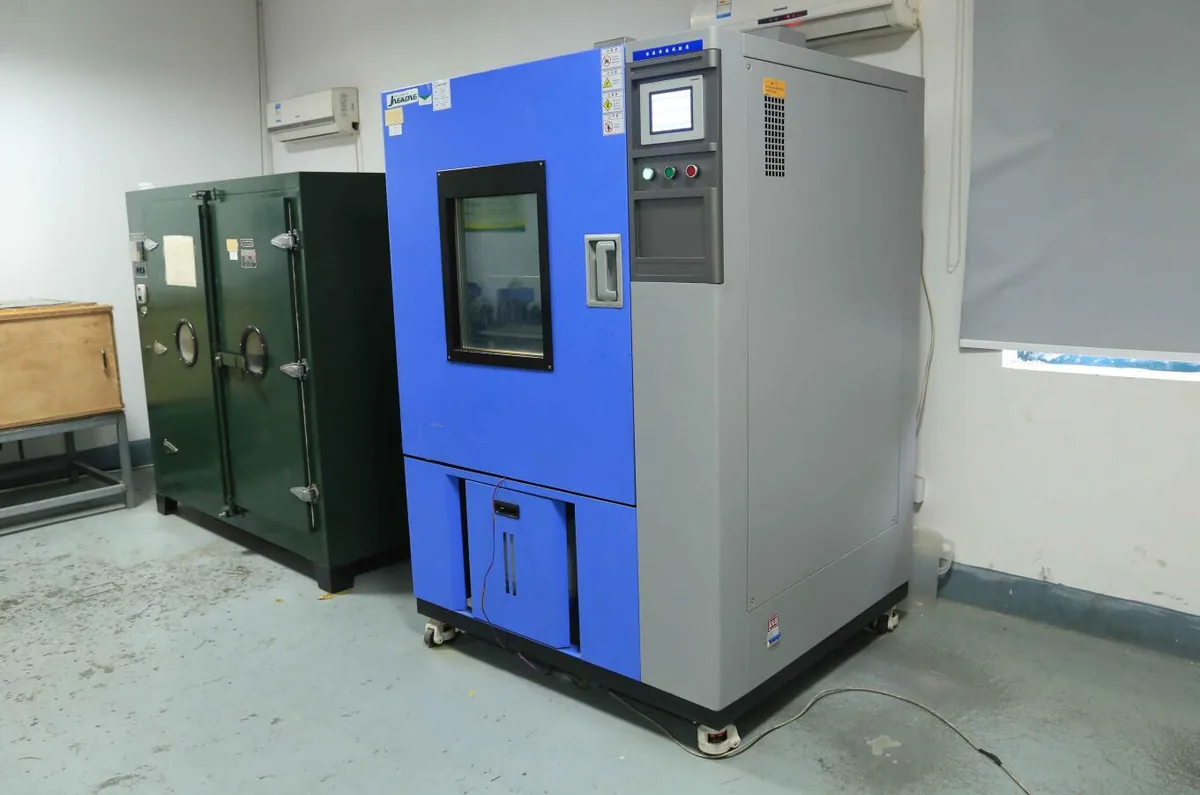
Ask for a life or environmental test record too — sample size, chamber temperature, acceleration model, dates, failures. What a real one looks like: one of our accelerated life-test records on an AC forward-curved model ran ten samples at 65 °C against a 40 °C target, Weibull shape 3, acceleration factor about 2.76, logging speed, current, power and a 600 V / 5 mA / 1 min dielectric check per unit before and after. It ran January to October, 6,280 hours, and one of the ten failed at seven months, traced on teardown to a bearing. Evaluated life was 27,534 hours at 90 % confidence. The failure is what makes it credible: a report with no failures and no dates has not been read by anyone, including whoever signed it.
Verify a certificate number with the body that issued it
Never accept a scan as evidence. Every certificate carries a number, an issuing body and a scope, and all three are checkable without the supplier's help. Our own documents as the worked example:
- Management system certificates. Ours are ISO 9001 BMCQ0222448M, ISO 14001 BMCE0222279M and ISO 45001 BMCS0222232M, valid to 8 December 2028. Chinese-issued ones are searchable on the CNCA public register and on the certifying body's own site; check status, scope wording and address. A management system certificate is not a product approval.
- The address trap. Compare the address block with the address you are standing in. A certificate can legitimately carry a registered, a certification and a production address that are not the same place. Ours do: the product approvals carry the Ditang, Yuyao production address, the management system certificates a separate certification address. Better we say so than you find it.
- North American component approval. Ours is an ETL Recognized Component under control number 5022563, looked up in the certification body's public directory. The authorization document names the applicant, the manufacturer, the party authorized to apply the mark, the report number and the standards — for us, UL 507 and CSA C22.2 No. 113. Read whether all three parties are one legal entity. Ours are.
- Read the model rule, not the logo. Component approvals often cover a model pattern and a power ceiling rather than a list. Ours covers part of the EC and DC centrifugal range inside that rule — DC ceilings of 600 W at 48 V, 500 W at 24 V, 200 W at 12 V, and around 1,100 W on the EC side. Neighbouring codes fall outside, so send the exact code and get it answered in writing.
- CE issued by a private test house. Our LVD KB2207084L01, EMC KB2207085E01 and RoHS KB2207086R01 were issued on 11 July 2022 and cover AC forward-curved LWFA108 to LWFA450 only. Two lines on it are worth reading aloud: it refers only to the sample and technical file submitted, and it is part of a full report that must be read with it. Ask for the report number printed on the certificate, then for the report, and check the listed standards are the ones your market needs.
- Ask what they do not hold. We hold no third-party IP certificate, so our IP44 to IP54 figures are catalogue design ratings checked in our own testing, and air performance is tested to the AMCA 210 method, which is not the same as AMCA certified. A supplier reporting no gaps has not looked. What each of our numbers does not cover is on the quality and certifications page.
Airflow, static pressure, voltage and control mode are enough for a first answer.
What to look at on the floor
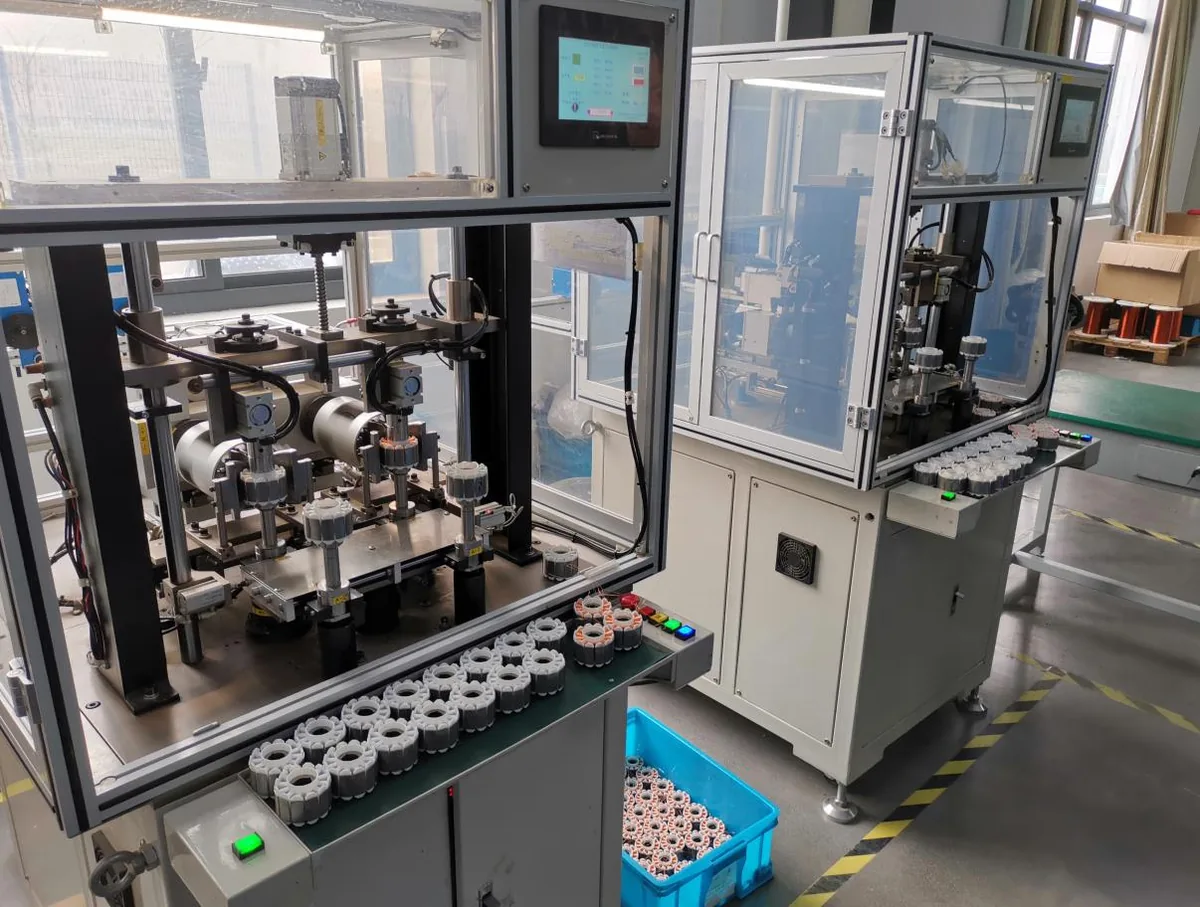
- Winding or assembly. Watch the sequence, not the machine. Ours runs automatic winding, coil insertion, inter-turn insulation test, then argon-arc welding of the lead wires — the chain an ETL factory audit walked in 2021. Ask where reject stators go; a line with no reject bin is a line you are not being shown.
- Balancing. Ask the operator, not the guide, what grade they work to and what happens to a rotor that fails twice. Check it against the drawing you were sent.
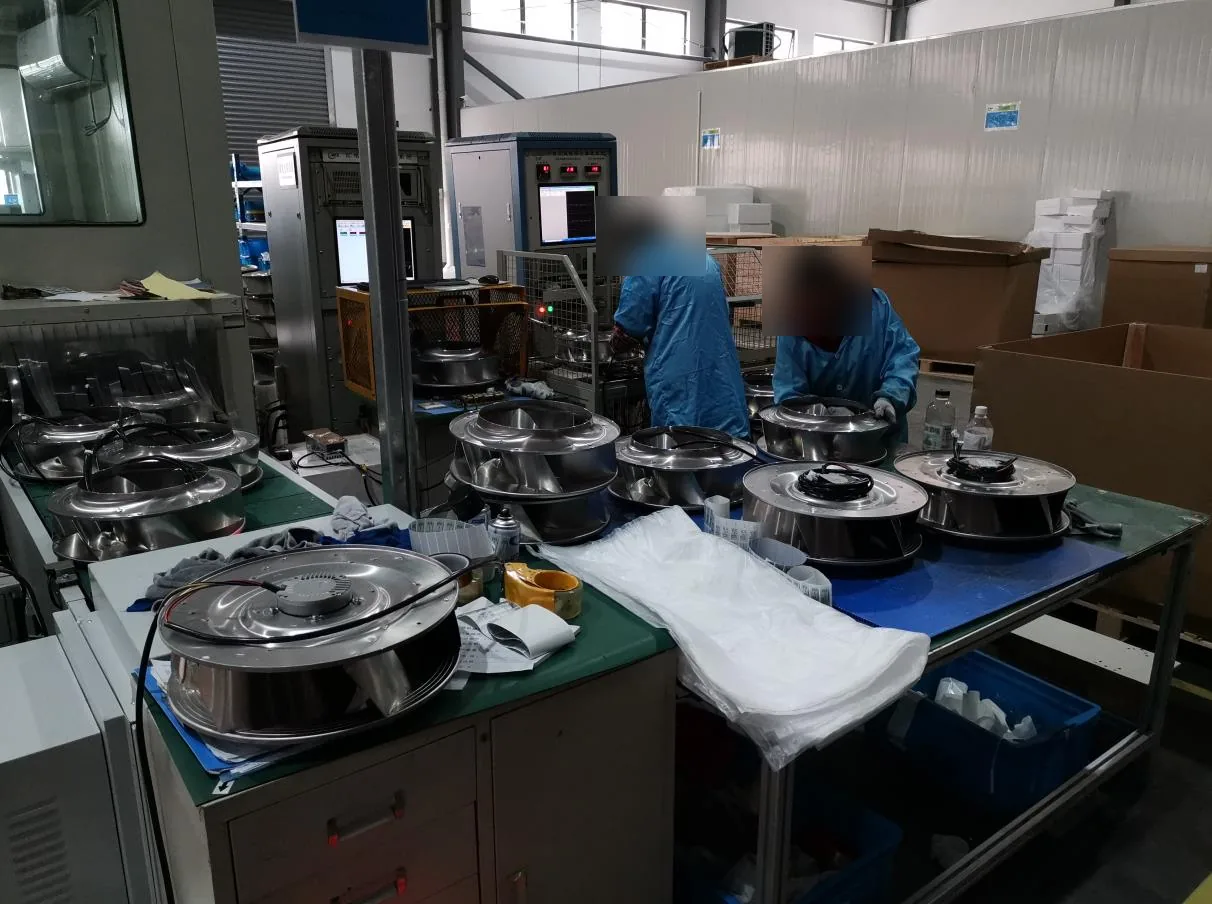
- End-of-line bench. Stand at it, time one unit, multiply by the daily output they quoted. If the arithmetic does not close, the test is a sample and not every unit.
- Packing. The most honest station in the building. Read the labels going on right now: model codes, carton prints, barcodes, and whether the QC pass sticker carries a date and an inspector mark.
Questions that expose a trading company presenting as a factory
- Compare the legal entity name on the business licence with the names on the certificates and the proforma invoice. Three different names is the commonest finding of all.
- Ask who owns the mould and tooling for your part, and to see the tool with its number.
- Ask for the drawing in native CAD with a revision history. A trader has the PDF, not the model.
- Ask who signs the first-article report and what happens on the line when a revision changes. A trader answers about communication, a plant about work instructions.
- Ask for a video call from the line today, with a named part on the bench and the date written on a card beside it.
- Ask what happens if you reject a lot: rework where, at whose cost, inspected by whom.
- Ask them to name the plant that will build your part, then put that name in the purchase agreement.
Sourcing is normal. Undeclared sourcing is the problem
A supplier who owns the drawing, the test plan and the warranty, and has parts built in a partner plant, can be an excellent supplier. What you cannot manage is one who lets you believe a line is theirs. The failure mode is not the arrangement, it is the surprise: their second-source decision becomes your engineering change six months after approval.
So ask every supplier to state, per family and in the contract, which lines are their own, which are built elsewhere to their drawings, who holds the drawing and the tooling, who carries the warranty, and what notice you get before a plant changes. Our warranty is 12 months whichever plant built the part, and the split itself is on our factory page, with project steps under our OEM process and model-level P-Q curves and CAD on our selection site. Samples ship in 1 to 3 days and production runs 15 to 30 days, so a sample-and-measure step costs a week and settles arguments documents cannot.
Auditing us, or building a checklist for someone else? Send the model code and the document list, and we will answer in writing. Talk to our engineering team.
Questions buyers ask
What documents should I ask a Chinese blower supplier for before I visit?
Six, always naming a specific model code: a drawing and datasheet with a version number and a change table; a first-article report with measured values rather than tick boxes; dynamic balance records showing the grade taken off the drawing and residual unbalance per rotor; end-of-line test records (earth continuity, dielectric withstand, insulation resistance, powered run test) with one day of raw data rather than a summary; a life or environmental test record with dates and the failures that actually occurred; and certificate scope stated per model. A supplier who cannot produce these has told you something before you buy a plane ticket.
How do I verify a Chinese supplier's certificate number with the issuing body?
Route it by certificate type. Chinese-issued management system certificates (ISO 9001, 14001, 45001) are searchable on the CNCA public register and on the certifying body's own website. North American component approvals are looked up by control number in the certification body's public directory, which shows the applicant, the manufacturer, the party authorized to apply the mark, the report number and the standards. A CE certificate from a private test house names a test report number on its face, so ask for that report. In every case check the status, the scope and the address, not the logo.
Does a CE certificate from a Chinese test house cover every model in the catalogue?
Usually not, and that is the single most common misreading. Ours (LVD KB2207084L01, EMC KB2207085E01, RoHS KB2207086R01, issued 11 July 2022) cover AC forward-curved LWFA108 to LWFA450 only. The certificate itself says it refers only to the sample and technical file submitted, and that it is part of a full report that must be read with it. Before you design a model in, send the exact model code and get written confirmation that the number covers it.
How do I tell a trading company from a factory?
Compare the legal entity name on the business licence with the names on the certificates and on the proforma invoice; three different names is the commonest finding. Then ask who owns the mould and tooling and to see the tool with its number, ask for the drawing in native CAD with a revision history, ask who signs the first-article report and what changes on the line when a revision changes, and ask for a video call from the line today with a named part on the bench. A trader answers about communication; a plant answers about work instructions.
Is it a problem if my blower supplier has parts built in another plant?
Not in itself. A supplier who owns the drawing, the test plan and the warranty, and has parts built in a qualified partner plant, can be an excellent supplier. The problem is an undeclared arrangement, because their second-source decision then becomes your engineering change six months after approval. Ask for the split in writing, per family, in the contract: which lines are their own, who holds the drawing and tooling, who carries the warranty, and what notice you get before a plant changes.
Which lines does LONGWELL build in its own plant?
Cross-flow fan production and the motor winding line run in our own plant in Yuyao, on our own drawings, moulds and impeller tooling. The winding sequence is automatic winding, coil insertion, inter-turn insulation test and argon-arc welding of the lead wires, and that chain was walked during the 2021 ETL factory audit. Every other family is engineered and specified by LONGWELL, built to LONGWELL drawings in qualified partner plants, and inspected to LONGWELL standards, with the 12-month warranty carried by LONGWELL either way.
More in this section
How to Specify a Centrifugal Blower
What to tell a blower supplier to get the right model first time: duty point, voltage, control mode, envelope, noise, IP, life and volume.
Read the pageTypes of Blower Impeller: Wheel Forms, Blade Geometry and Balancing
Forward-curved, backward-curved and radial wheels compared: blade form, width, materials and balancing grades, and what each does to the curve.
Read the pageWhat drives the cost of an OEM centrifugal blower
No prices - what actually moves a centrifugal blower quotation: wheel size and material, motor type, tooling, volume, certification and freight.
Read the pageSend the duty point, get the model
Airflow, static pressure, voltage and control mode are enough to start — a drawing is better. An engineer answers, usually within one working day (GMT+8). Samples of catalogue models ship in 1–3 days.